Paris doesn’t sleep when the sun goes down. While the Eiffel Tower sparkles and the Seine glows under streetlights, the city transforms into something wilder, warmer, and more alive than it is by day. This isn’t just about drinking wine at a sidewalk café-this is about dancing in hidden basements, sipping gin in speakeasies, and stumbling out at 4 a.m. into a city that still feels like it’s humming with energy. If you think Paris is all museums and baguettes, you’re missing half the story.
Where the Locals Go After Work
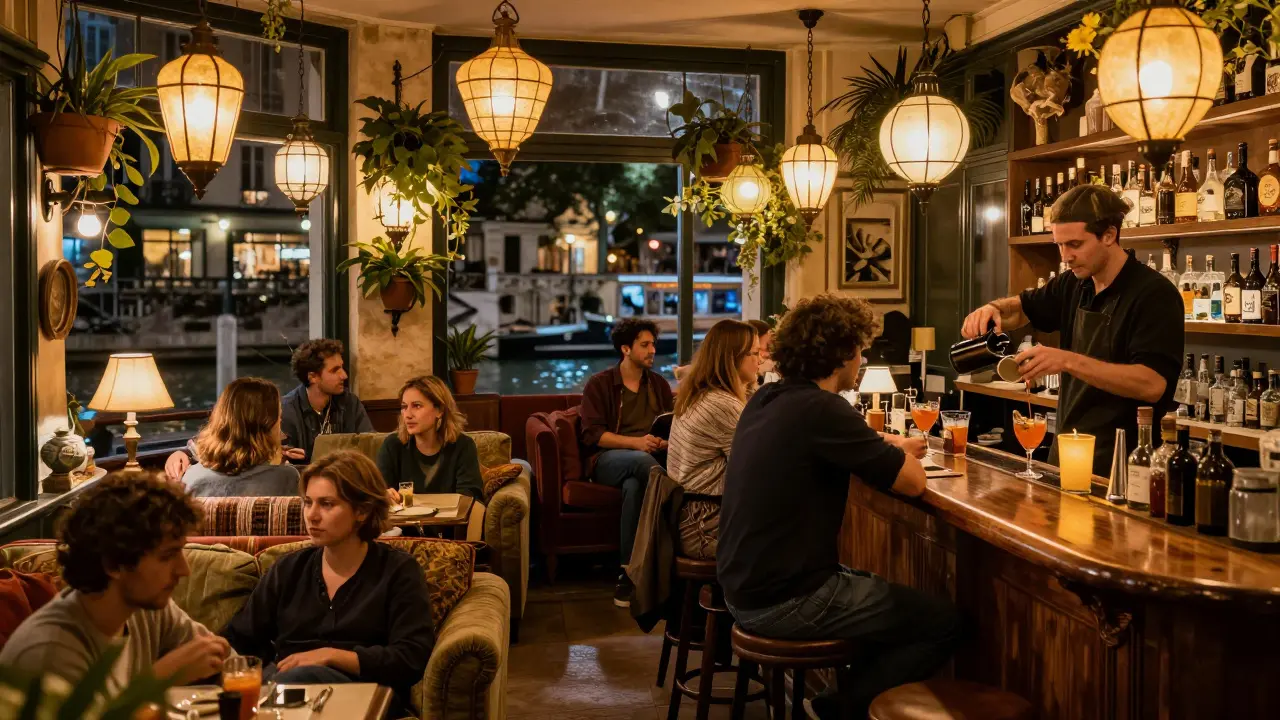
Most tourists head straight to Montmartre or the Champs-Élysées, but the real nightlife lives in the neighborhoods most guidebooks barely mention. In the 10th arrondissement, around Canal Saint-Martin, you’ll find Le Comptoir Général, a sprawling, mismatched bar that feels like a friend’s attic crossed with a Moroccan bazaar. No sign. No menu. Just a bartender who asks what mood you’re in and pours you something unexpected. It’s not fancy. It’s not loud. But it’s where Parisians unwind after a long day.
Head to the 11th, and you’ll find Le Perchoir, a rooftop bar with a view of the city’s skyline and a crowd that’s half locals, half travelers who know better. The cocktails are priced like a decent lunch, not a tourist trap. And if you’re lucky, you’ll catch a live jazz set on a Thursday night-no cover charge, no line, just a saxophone and a crowd swaying under string lights.
The Club Scene That Doesn’t Care About Your Instagram
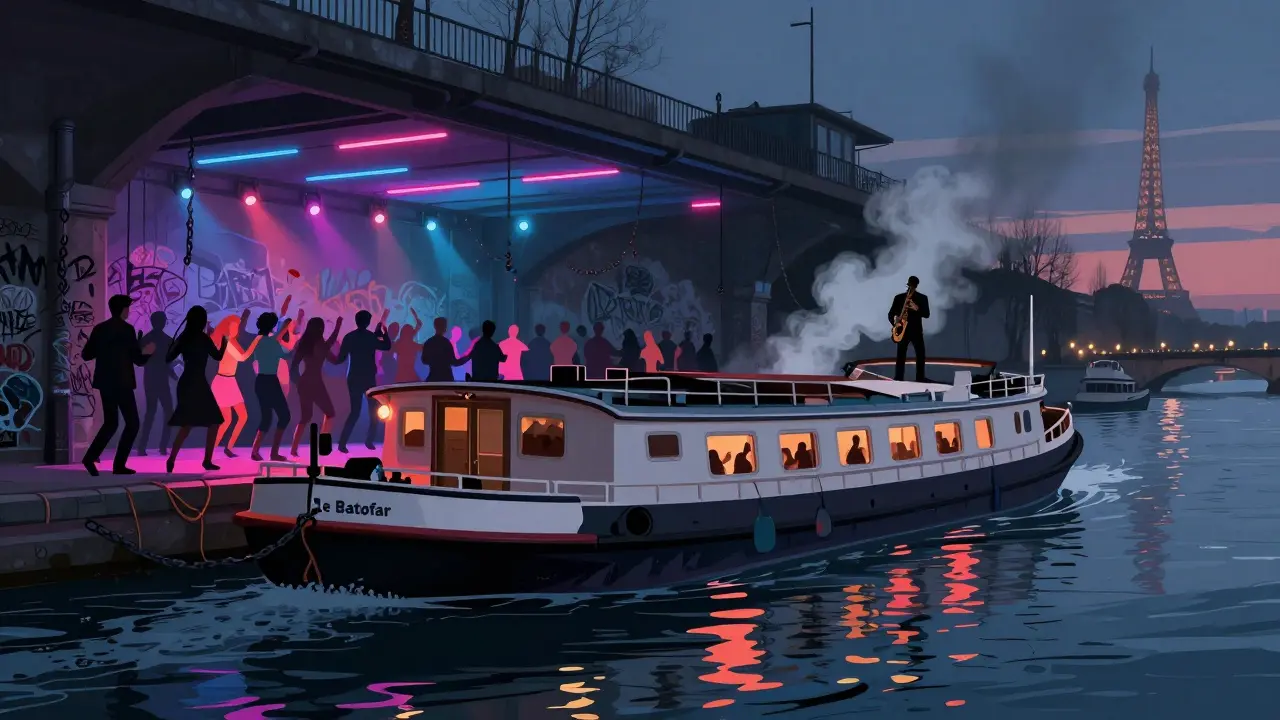
Parisian clubs don’t care if you’re wearing designer shoes. They care if you can dance. If you want to experience real French nightlife, skip the overpriced, velvet-rope clubs near the Champs-Élysées. Instead, go to Le Batofar, a converted barge docked on the Seine. It’s been around since the ’90s and still feels like a secret. The music shifts every night-techno one night, hip-hop the next, experimental electronic on weekends. The crowd? Young, diverse, and totally unimpressed by your “I’ve been to Ibiza” story.
For something even rawer, try La Machine du Moulin Rouge in the 18th. It’s not the Moulin Rouge you’ve seen in movies. This is a warehouse space where underground artists throw themed nights-think silent disco under neon lights, or a DJ set inside a room full of giant inflatable animals. It’s weird. It’s fun. And it’s never on the same schedule twice.
The Speakeasy Revolution
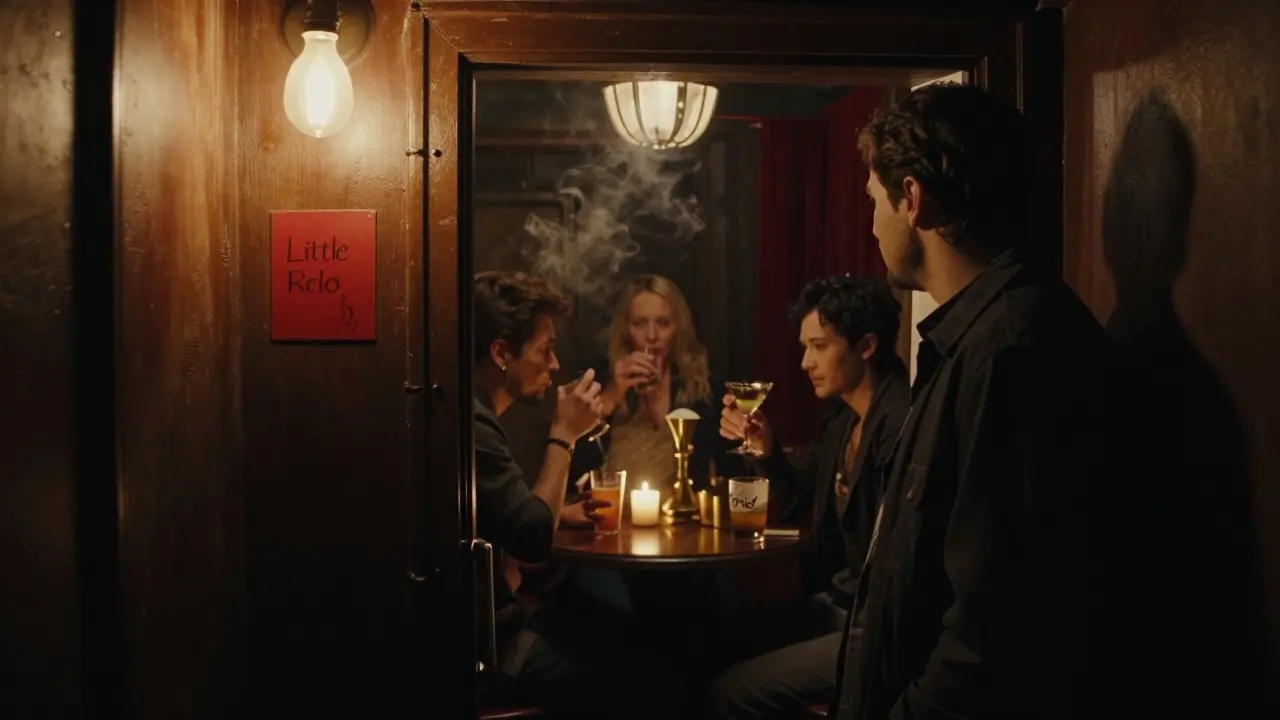
Paris has its own version of the Prohibition-era bar. These aren’t themed tourist traps with bow ties and jazz records. They’re places where the bartender knows your name by the third visit. Little Red Door in the 10th is consistently ranked among the world’s best bars. You’ll find it behind a fridge door in a nondescript alley. The menu? Five cocktails, each named after a different emotion. Try the “Grief”-it’s made with mezcal, yuzu, and smoked salt. It tastes like a memory you can’t quite place.
Then there’s Bar Hemingway at the Ritz. Yes, it’s fancy. But it’s also where Parisian intellectuals have been drinking since the 1920s. The martinis are stiff. The silence is heavy. And the staff won’t take your photo. This isn’t a place to post. It’s a place to sit, sip, and listen to the quiet hum of a city that’s been doing this longer than you’ve been alive.
Midnight Eats That Keep the Night Alive
Parisians don’t go out to eat. They go out to eat after they’ve been out. That’s why the best late-night bites aren’t in tourist zones. Head to Le Comptoir du Relais in Saint-Germain-des-Prés. It’s tiny. It’s always packed. And it serves the best steak frites in the city-crispy fries, medium-rare beef, and a red wine sauce that lingers on your tongue. Open until 2 a.m. on weekends.
Or try La Belle Hortense, a tiny bistro in the 13th that turns into a late-night noodle bar after midnight. The ramen is rich, the broth is dark, and the owner, a former jazz drummer, will ask you about your day before sliding a bowl across the counter. No menu. Just what’s left in the kitchen.
What to Wear (And What Not To)
Parisians dress for comfort, not for show. You don’t need a designer coat to get into a bar. But you do need to look like you’ve put in some effort. No sneakers with socks. No baseball caps. No flip-flops after dark. A simple black jacket, jeans, and clean shoes will get you farther than a full suit. Women don’t wear heels to dance-they wear boots. Men don’t wear cologne-they smell like coffee and cigarettes. It’s not about luxury. It’s about attitude.
And if you’re wondering whether you need a reservation? Sometimes yes, sometimes no. The best places don’t take bookings. You show up. You wait. You talk to the person next to you. And if you’re lucky, you’ll be invited to the next table.
When to Go (And When to Stay Home)
Paris nightlife peaks between Thursday and Sunday. Weeknights are quiet. Monday is for cleaning up. Tuesday is for catching up. Wednesday is for trying something new. But Thursday? That’s when the city exhales. Bars fill. Clubs open. The Seine becomes a river of laughter.
Don’t go on a Monday. Don’t go if you’re tired. Don’t go if you’re looking for a party like Las Vegas. Paris doesn’t do loud. It does deep. It does slow. It does long. You’ll leave at 5 a.m., not because you’re drunk, but because you didn’t want the night to end.
One Last Thing: The Rules No One Tells You
1. Don’t ask for a “happy hour.” Paris doesn’t have them. Drinks are priced fairly, and no one’s trying to upsell you.
2. Don’t tip. Service is included. A smile is enough.
3. Don’t take photos of people without asking. Parisians hate being turned into content.
4. Don’t rush. The best moments happen after midnight, when the crowd thins and the music gets quieter.
5. Don’t leave without walking along the Seine. Just once. At 3 a.m. The city is yours then. And you’ll never forget it.
Is Paris nightlife safe for solo travelers?
Yes, Paris is generally safe for solo travelers at night, especially in the main nightlife districts like Le Marais, Saint-Germain, and Canal Saint-Martin. Stick to well-lit streets, avoid empty alleys after 2 a.m., and keep your bag close. The metro runs until about 1:30 a.m., and night buses (Noctilien) connect the city until dawn. Most bars and clubs have security, and locals are quick to help if you look lost.
Do I need to speak French to enjoy Paris nightlife?
Not at all. Most bartenders and club staff speak English, especially in popular areas. But a simple “Bonjour,” “Merci,” or “Ça va?” goes a long way. Parisians appreciate effort. You don’t need fluency-you just need politeness. And if you stumble over a phrase? They’ll smile, help you out, and maybe invite you to sit down.
What’s the average cost of a night out in Paris?
A casual night out-two cocktails, a snack, and a metro ride-costs about €25-€40. Clubs charge €10-€15 entry, but many don’t charge at all before midnight. Speakeasies like Little Red Door serve cocktails for €16-€20. If you’re eating late, expect €15-€25 for a solid meal. You can have an unforgettable night without spending €100. The key? Skip the tourist traps and follow the locals.
Are there any age restrictions for clubs in Paris?
Yes. Most clubs require ID and only allow entry to those 18 and older. Some venues, especially those serving alcohol late at night, enforce a 21+ policy, but that’s rare. Always carry a passport or EU ID card. Don’t rely on a driver’s license-many bouncers won’t recognize non-EU IDs. If you’re under 18, you can still enjoy bars and live music venues, but clubs are off-limits.
What’s the best way to get around after midnight?
The metro stops running around 1:30 a.m., but the Noctilien night bus network runs all night, connecting major zones like Gare du Nord, Châtelet, and Montparnasse. A single ticket costs €2.50 and works on all night buses. Taxis and Uber are available but can be expensive and slow during peak hours. Walking is often the best option-if you’re in a central area like Le Marais or Saint-Germain, you can easily reach most spots on foot. Just watch your step.