When you think of Berlin, you might picture the Brandenburg Gate, techno clubs that never sleep, or the lingering traces of the Wall. But hidden in the city’s shadows for centuries are the women and men who turned companionship into an art form-figures whose charm, wit, and courage shaped Berlin’s social fabric more than most realize. These weren’t just hired company; they were influencers, political confidants, and cultural icons who moved in the same circles as kings, poets, and revolutionaries.
The First Berlin Courtesans: Power Behind the Throne
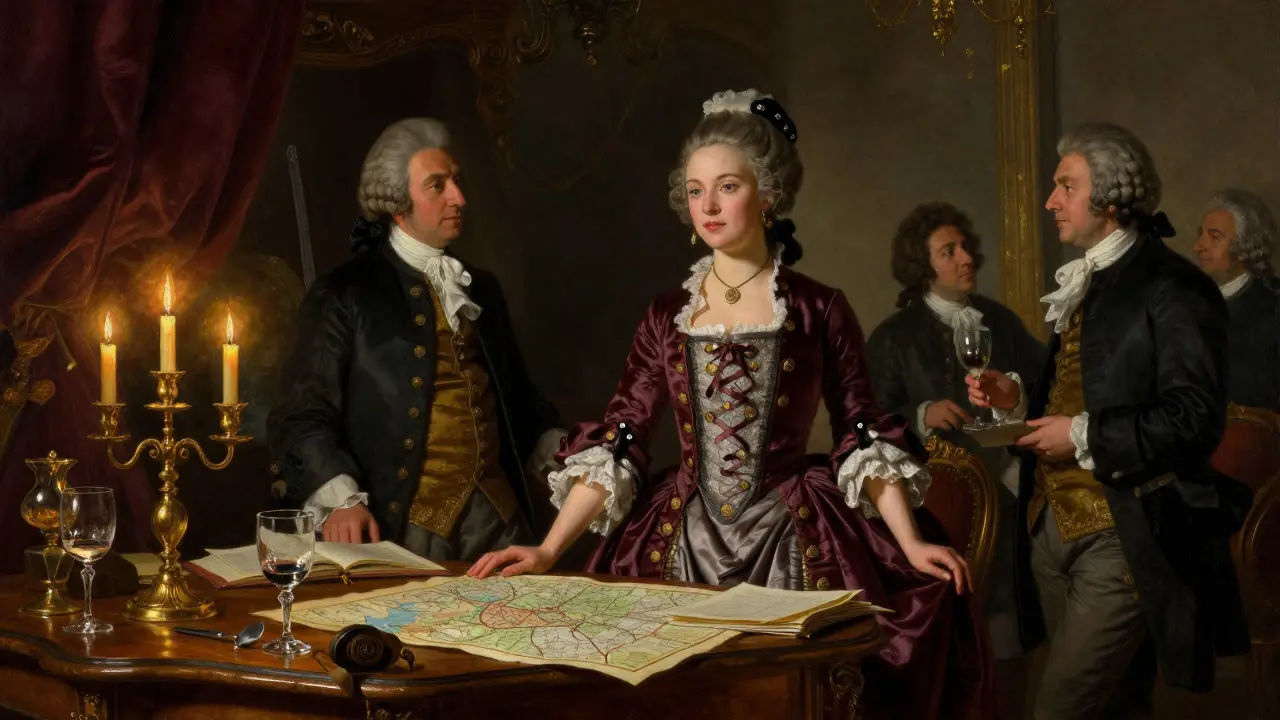
In the 18th century, Berlin was a rising Prussian capital, and with power came desire. The most famous name from that era was Marie Louise von Degenfeld. She wasn’t just a courtesan-she was the mistress of Elector Frederick William of Brandenburg. Her influence extended beyond the bedroom. She advised on diplomatic appointments, hosted salons where Enlightenment thinkers debated, and even helped broker peace talks between rival nobles. Her salon on Unter den Linden became the unofficial second court, where power was negotiated over wine and poetry.
Unlike courtesans in Paris or Vienna, Berlin’s elite companions had to be sharp. Prussia valued discipline, intellect, and loyalty. A beautiful face wasn’t enough-you needed to speak three languages, understand military strategy, and know when to stay quiet. Many of these women came from impoverished noble families and saw companionship not as degradation, but as survival with dignity. Some even owned property, ran businesses, and educated their children in private schools.
The Weimar Era: Freedom, Flash, and Fear
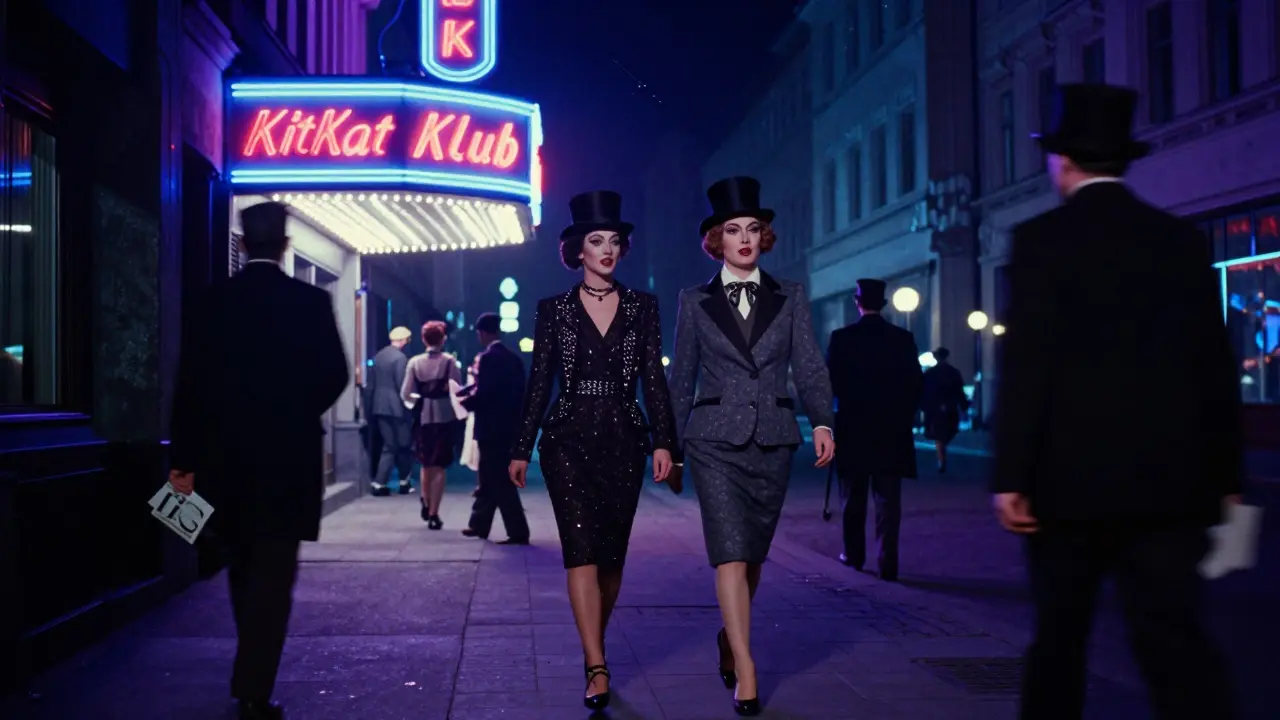
After World War I, Berlin exploded into a cultural free-for-all. The Weimar Republic (1919-1933) turned the city into the hedonistic heart of Europe. Nightclubs like the Kit Kat Klub and Eldorado thrived. Transgender performers, drag kings, and female escorts walked the streets openly, often in tailored suits and top hats. This was the era of Lotte H. Eisner, a Jewish woman who became a legend not just for her beauty but for her role as a cultural connector. She hosted gatherings for artists like Bertolt Brecht and Marlene Dietrich, and her clients included diplomats, spies, and future Nazi officials.
What made Berlin’s escorts unique during this time was their visibility. They weren’t hidden away. They appeared in newspapers, films, and cabarets. Some, like Anna von Scholtz, wrote memoirs published under pseudonyms. Her book, My Nights in Berlin, described how she used her position to smuggle anti-Nazi pamphlets and help Jewish friends escape the city before 1933. She was arrested in 1934 and disappeared-her fate still unknown.
The state didn’t regulate these women so much as exploit them. Police turned a blind eye to brothels if they paid bribes, but they raided anyone who spoke out. The escorts of Weimar Berlin didn’t just offer company-they offered resistance.
Post-War Berlin: Survival in Two Cities
After the war, Berlin was split. In the East, the GDR officially banned prostitution. But it never disappeared. In East Berlin, women worked under the radar-sometimes as secretaries, sometimes as translators for foreign delegations. One of the most feared and respected figures was Helga Richter, who worked as a liaison for Soviet officers. She spoke fluent Russian, knew every spy in the city, and was rumored to have passed intelligence to the Stasi. She was never arrested. Her power came from silence and discretion.
In West Berlin, the American and British occupation forces created a booming demand for companionship. The city became a playground for GIs and businessmen. Escorts in the Kurfürstendamm district earned more than factory workers, and many operated out of elegant apartments with doormen. Christa K. Winkler ran one of the most exclusive agencies. She didn’t just match clients-she vetted them. She refused to send women to men with criminal records or known violence. Her clients included politicians, journalists, and even a few rock stars. She kept detailed logs-later destroyed-of every encounter. Her rule: no one leaves without a signed confidentiality agreement.
The Modern Era: From Shadows to Screens
Today, Berlin’s escort scene is digital, diverse, and regulated in a way that’s both more open and more dangerous. Platforms like social media and dating apps have replaced the old parlors. Women and men now advertise themselves with curated photos, personal bios, and video clips. The most successful modern companions-like Elise M., who runs a blog called Berlin After Dark-don’t just sell time. They sell experience: a walk through Tiergarten at sunset, dinner at a hidden Michelin-starred spot, or a deep conversation about philosophy over coffee.
Legal gray areas remain. Prostitution is legal in Germany, but advertising it publicly is restricted. Many escorts now use coded language: "companion," "hostess," "cultural liaison." Some work with security firms to screen clients. Others partner with therapists to support mental health. The stigma hasn’t vanished, but the conversation has changed. Younger generations see it as work-not shame.
What hasn’t changed is the core truth: Berlin’s most iconic escorts have always been more than their services. They’ve been storytellers, survivors, and silent architects of the city’s soul.
Why These Women and Men Still Matter
Forget the myths. These weren’t women who fell into vice. They were people who made choices in a world that gave them few. They navigated politics, war, poverty, and prejudice-and still found ways to thrive. Their stories are in the alleyways of Mitte, the quiet corners of the Berliner Philharmonie, and the footnotes of forgotten memoirs.
When you walk through Berlin today, you’re walking where they walked. The city’s freedom, its chaos, its creativity-these didn’t come from politicians alone. They came from those who dared to be seen, to be heard, to be human in a world that tried to erase them.
What You Won’t Find in Guidebooks
There’s no plaque for Marie Louise von Degenfeld. No statue for Anna von Scholtz. You won’t find Christa Winkler’s name on any tourist map. But if you know where to look, you’ll find traces: a faded photo in a museum archive, a line in a 1920s cabaret program, a letter tucked inside a book at the Staatsbibliothek.
These are the real legends of Berlin-not the ones on postcards, but the ones who lived in the cracks, shaped the culture, and refused to be forgotten.
Were escorts in Berlin ever legally recognized in history?
Yes, but not as "escorts." In the 18th and 19th centuries, courtesans were tolerated under unofficial agreements with authorities, especially if they paid taxes or served political interests. During the Weimar Republic, prostitution was decriminalized and regulated through health checks. After 1945, East Germany banned it outright, while West Germany maintained a gray zone. Since 2002, prostitution has been legal in Germany under the Prostitution Act, but advertising remains restricted.
Did any famous historical figures in Berlin have known escort relationships?
Absolutely. Prussian kings like Frederick William I and Frederick the Great had documented relationships with courtesans. In the Weimar era, artists like Bertolt Brecht and writers like Christopher Isherwood openly wrote about their companions. Even political figures like Willy Brandt were rumored to have had relationships with women who worked in the escort scene during his early political years. These relationships were rarely public, but they were well-documented in private letters and diaries.
How did Berlin’s escorts survive during the Nazi regime?
Many were targeted. The Nazis labeled prostitution a "moral threat" and shut down brothels. Women who were Jewish, LGBTQ+, or politically active were arrested, sent to camps, or disappeared. Some survived by going underground, working in secret, or using their connections to help others escape. A few, like Anna von Scholtz, used their position to smuggle documents or hide people. Others changed identities, moved to the countryside, or married to avoid detection. Survival often meant silence.
Are there any museums or archives in Berlin that document escort history?
There’s no museum dedicated solely to escort history, but the Deutsches Historisches Museum and the Lesbisch-Schwules Museum have exhibits on Weimar-era sexuality and gender roles. The Staatsbibliothek holds private archives from former companions, including letters, diaries, and business records. Access is restricted to researchers, but some materials have been digitized and published in academic journals.
What’s the biggest myth about Berlin escorts today?
That they’re all victims or criminals. Many modern companions in Berlin choose this work for the flexibility, income, and autonomy. They’re teachers, artists, and students who work evenings. The real issue isn’t the work-it’s the stigma and lack of legal protections. Clients who abuse or exploit are the problem, not the workers. The most successful modern escorts run their businesses like any freelance profession-with contracts, boundaries, and safety protocols.