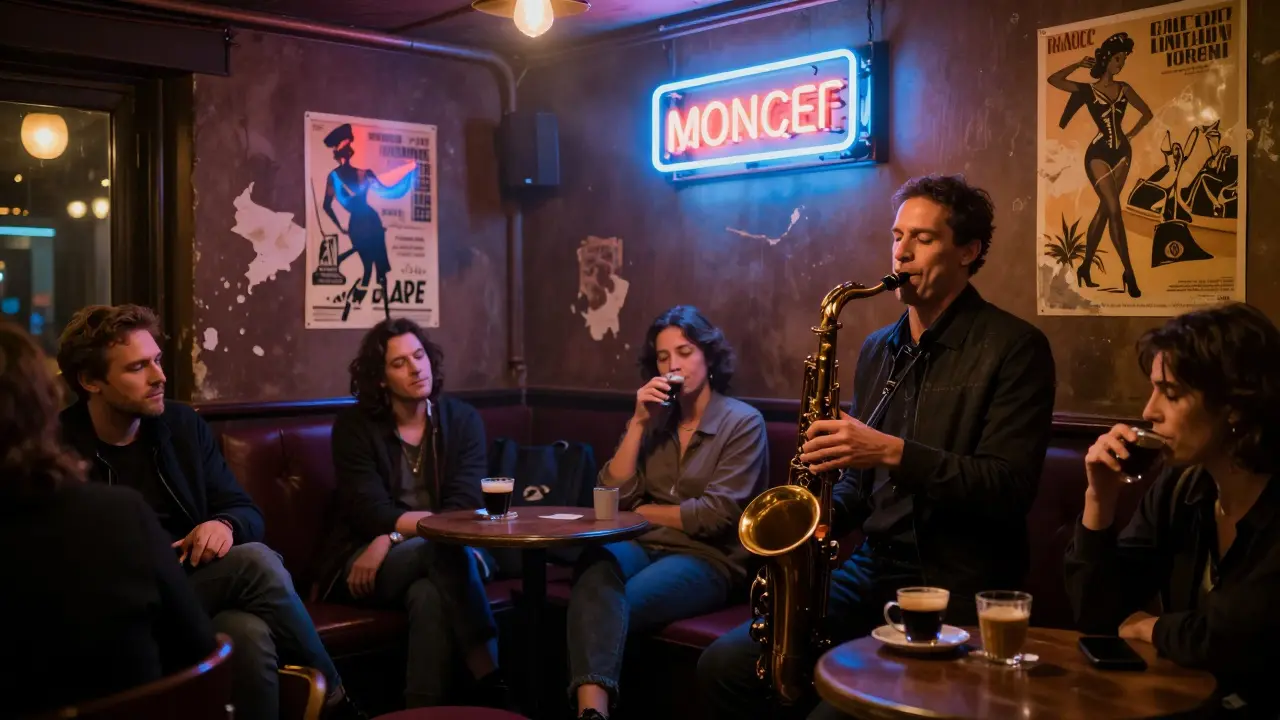
Paris doesn’t sleep-it just changes its outfit. While the Eiffel Tower glows at dusk and the Louvre closes its doors, the city’s real rhythm begins after midnight. This isn’t the Paris of postcards and daytime crowds. This is the Paris of smoky jazz clubs, whispered conversations over espresso, and neon-lit alleys where history meets hedonism. If you’ve ever wondered what it’s really like to experience Paris after dark, you’re not alone. Thousands come each year chasing the magic, the music, and the mystery. And most leave with a story they’ll tell for decades.
Where It All Began: The Birth of Parisian Nightlife
Paris’s nightlife didn’t start with trendy rooftop bars or Instagrammable cocktails. It began in the 1880s, when the Moulin Rouge opened its doors in Montmartre. Red windmills spun above a crowd of artists, writers, and workers who came not just to dance, but to escape. The can-can wasn’t just a dance-it was rebellion. Women in lace and tights kicked high, challenging social norms with every step. The venue didn’t just entertain; it became a symbol of freedom. By 1900, over 20,000 people a week came to see the shows. Today, the Moulin Rouge still operates, but it’s no longer just for tourists. Locals still book tickets, especially on Tuesdays when prices drop and the crowd leans more Parisian than foreign.
Before the cabarets, there were cafés. Not the quiet, bookish kind you see in the 6th arrondissement, but the rowdy, smoke-filled places where poets argued philosophy and anarchists plotted revolutions. Café de Flore and Les Deux Magots were once the unofficial headquarters of existentialism. Sartre and Beauvoir didn’t just drink coffee-they debated the meaning of life over cups that lasted hours. These places still exist, but their soul has shifted. Now, they’re more about quiet reading and artisanal pastries than midnight debates. But if you know where to look, the old energy still lingers.
The Modern Cabaret Scene: Beyond the Red Windmill
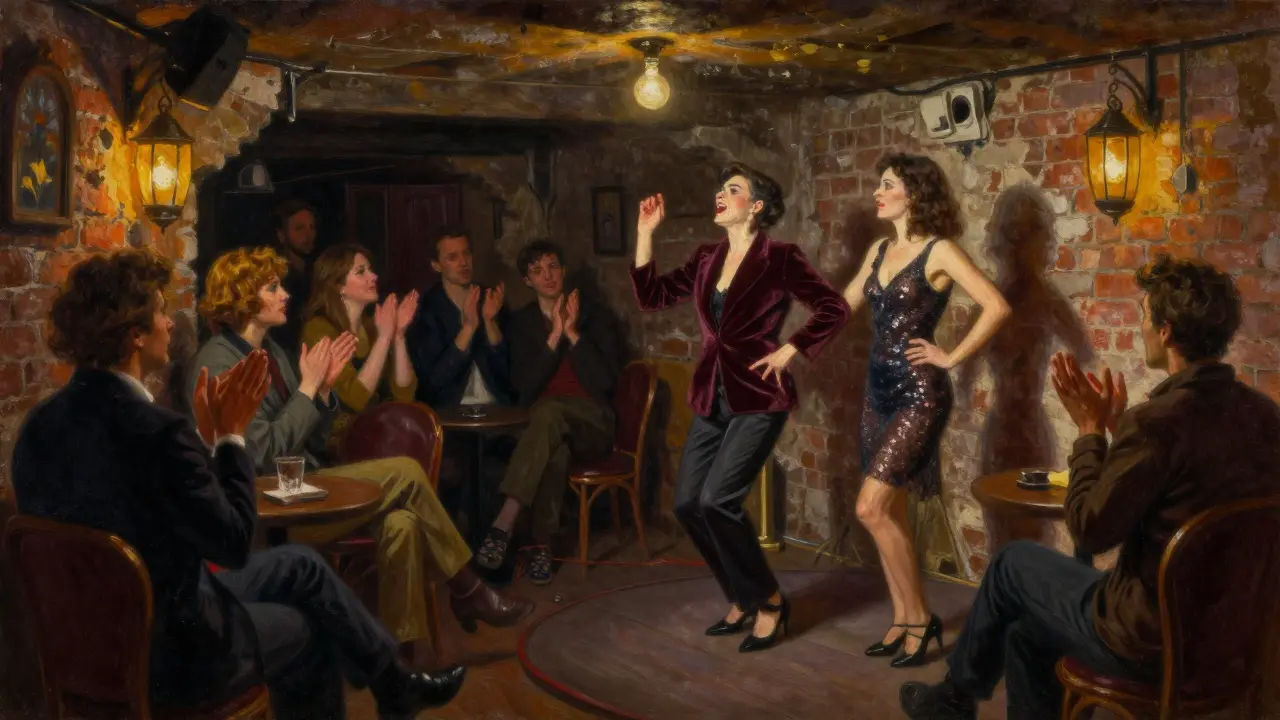
Moulin Rouge is iconic, but it’s not the whole story. Paris has dozens of cabarets today, each with its own flavor. Le Lido on the Champs-Élysées offers glitz and feathers, with dancers who train like Olympians. The costumes alone cost more than a month’s rent for most Parisians. But if you want something rawer, head to Le Chat Noir-a modern revival of the original 19th-century haunt. It’s tucked into a basement in Pigalle, no neon sign, just a flickering bulb and a line of locals waiting to get in. The shows here are smaller, wilder, and far more intimate. You might end up dancing with the lead singer by the end of the night.
Then there’s La Cigale in the 18th. It started as a music hall in 1887 and now hosts indie rock bands and electronic acts. It’s not a cabaret in the traditional sense, but it carries the same spirit: live performance, no filters, no pretense. Tickets start at €15, and the crowd? Mostly locals under 30. You’ll hear French rap, post-punk, and experimental jazz-all in one night. It’s the kind of place where you walk in alone and leave with three new friends.
Late-Night Cafés: Where the Real Paris Lives
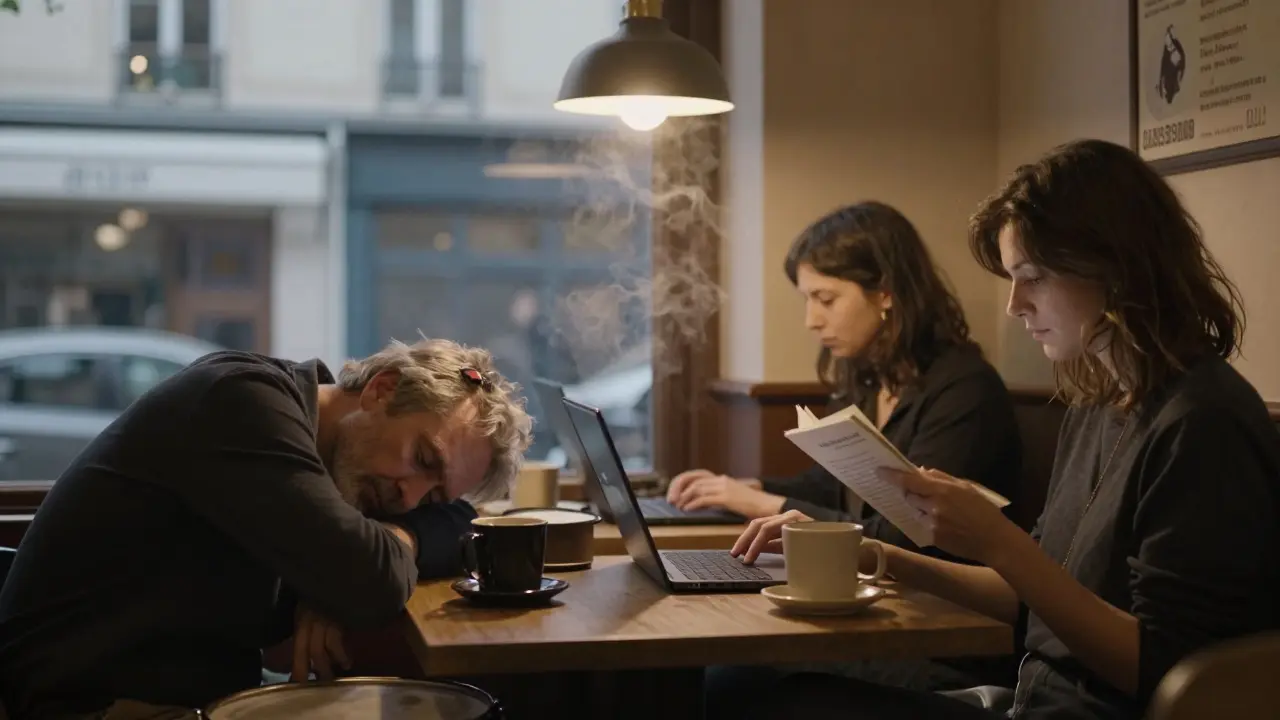
Forget the tourist traps. The best late-night cafés in Paris aren’t on Google Maps. They’re the ones with handwritten signs, mismatched chairs, and baristas who know your order before you speak. In the 11th arrondissement, Café de la Lune opens at 10 p.m. and doesn’t close until 5 a.m. The coffee is strong, the croissants are warm, and the playlist? A mix of Serge Gainsbourg, Nina Simone, and French house tracks from 2003. Regulars include a retired jazz drummer, a graphic designer who works nights, and a woman who comes every Friday to read poetry aloud. No one bats an eye. It’s just how things are.
Down in the 13th, Le Procope-the oldest café in Paris, founded in 1686-still serves espresso at 2 a.m. on weekends. It’s not fancy. The tables are sticky, the napkins are paper, and the waiter doesn’t smile. But the history? Unmatched. Voltaire drank here. Rousseau wrote here. Today, it’s a mix of students, night-shift workers, and curious travelers. Order the café allongé-a long black with a splash of milk. It’s how Parisians take it after midnight.
And then there’s Le Comptoir Général in the 10th. It’s not technically a café-it’s a cultural space. A former warehouse turned into a bar, bookstore, and art gallery. You can sip a gin cocktail while flipping through a 1970s African photo journal. Or listen to a live Afrobeat set while eating grilled plantains. It’s open until 3 a.m. on weekends. And yes, it’s chaotic. But that’s the point.
The Bar Scene: From Hidden Speakeasies to Dive Pubs
Parisian bars don’t advertise. They whisper. If you want a real cocktail, you need to know where to knock. Clamato in the 10th is one of the city’s best-kept secrets. No sign. Just a red door and a buzzer. You’ll need to call ahead. Inside, bartenders mix drinks using herbs from their rooftop garden. The menu changes weekly. A recent cocktail? Beetroot, thyme, and smoked aquavit. It tasted like autumn in a glass. You’ll pay €18, but it’s worth it.
For something cheaper and grittier, try Bar du Marché in the 12th. It’s a tiny hole-in-the-wall with five stools, a jukebox, and a fridge full of local beer. No menu. Just ask the bartender what’s on tap. He’ll hand you a glass of bière de garde from a brewery in Lille. €4.50. You’ll be back tomorrow.
And then there’s Le Perchoir-a rooftop bar with views of the Eiffel Tower. It’s popular, sure. But it’s not fake. The cocktails are expertly made, the music is curated, and the crowd? Mostly Parisians who work in design, film, or fashion. You’ll see people here at 1 a.m., wrapped in coats, sipping gin, watching the city glow. It’s not just a bar. It’s a moment.
What You’ll See (and What You Won’t)
Paris nightlife isn’t about clubs with velvet ropes and bouncers. There are few of those. Instead, you’ll find people dancing on sidewalk cafes, singing along to vinyl in basements, and laughing over bottles of wine at 4 a.m. You won’t see neon signs screaming "OPEN 24/7." You’ll see handwritten notes: "Fermé lundi" or "Ouvert jusqu’à 5h."
Don’t expect to find a nightclub where you can dance until sunrise unless you’re in the 18th or 19th arrondissements. Even then, it’s not EDM or techno-it’s French house, disco revival, or jazz fusion. The music is slow, deep, and emotional. It’s not meant to pump you up. It’s meant to pull you in.
And the dress code? There isn’t one. Parisians dress for comfort, not status. You’ll see suits next to hoodies. Heels next to sneakers. No one checks your shoes. No one judges your outfit. You’re just another soul out after dark.
When to Go and How to Stay Safe
The best nights for nightlife are Thursday through Sunday. Monday and Tuesday? Everything shuts early. Wednesday is quiet-except for jazz nights in the 6th.
Public transport runs until around 1:30 a.m., but the night bus (Noctilien) keeps going until 5:30 a.m. It’s safe, clean, and cheap. €2.50 per ride. Don’t rely on Uber. It’s expensive, and drivers often avoid late-night trips in certain areas.
As for safety: Paris is safe at night, but not because it’s empty. It’s safe because people are out. The streets are alive. Still, stick to well-lit areas. Avoid isolated alleys in Montmartre after midnight. Don’t flash cash. And if someone offers you a "free" drink? Say no. It’s not hospitality-it’s a trick.
Why It Still Matters
Parisian nightlife isn’t about partying. It’s about connection. It’s about the old man who plays accordion outside the metro station at 1 a.m. The woman who sells warm chestnuts from a cart. The barista who remembers your name. This is a city that doesn’t just stay awake-it stays human.
There’s no single "best" night out in Paris. There are dozens. A jazz set in a basement. A croissant at 3 a.m. A conversation with a stranger who becomes a friend. That’s the art of it. Not the spectacle. Not the photo op. But the quiet, messy, beautiful moments you didn’t plan for.
What time do Parisian bars and cafés usually close?
Most cafés and bars in Paris close between 2 a.m. and 5 a.m., depending on the neighborhood. In tourist-heavy areas like Montmartre or the Latin Quarter, places may close earlier, around midnight. But in neighborhoods like the 11th, 18th, or 19th, it’s common to find spots open until 5 a.m., especially on weekends. Some cafés, like Café de la Lune, operate all night on weekends.
Is Paris nightlife safe for solo travelers?
Yes, Paris is generally safe for solo travelers at night, especially in well-traveled areas. The city is full of people out after dark, and public transport runs late. Stick to main streets, avoid isolated alleys in Montmartre or Goutte d’Or after midnight, and keep valuables secure. Don’t accept drinks from strangers, and trust your instincts. Most locals are friendly and willing to help if you seem lost.
Do I need to dress up to go out in Paris at night?
No, you don’t need to dress up. Parisians value comfort and authenticity over flashy outfits. Jeans, a nice shirt, or even a hoodie are perfectly fine. You’ll see everything from tailored suits to sneakers. The only exception is high-end cabarets like Le Lido, where smart casual is preferred. But even there, you won’t be turned away for wearing jeans. The real rule? Be yourself.
What’s the best way to get around Paris at night?
The best option is the Noctilien night bus network, which runs from about 1:30 a.m. to 5:30 a.m. and covers most of the city. A single ticket costs €2.50 and works on all lines. Taxis and Uber are available but can be expensive and harder to find after 2 a.m. Walking is fine in central areas like the 1st, 4th, or 6th arrondissements, but avoid walking alone in less populated zones after midnight.
Are there any free nightlife experiences in Paris?
Yes. Many jazz bars offer free live music on weekdays-try Le Caveau de la Huchette or La Lune en Parachute. Street musicians play near Notre-Dame and along the Seine after dark. You can also wander through the Marché des Enfants Rouges at night-it’s open until midnight on weekends and has food stalls, live DJs, and a chill vibe. And don’t miss the free light shows at the Eiffel Tower every hour after sunset.