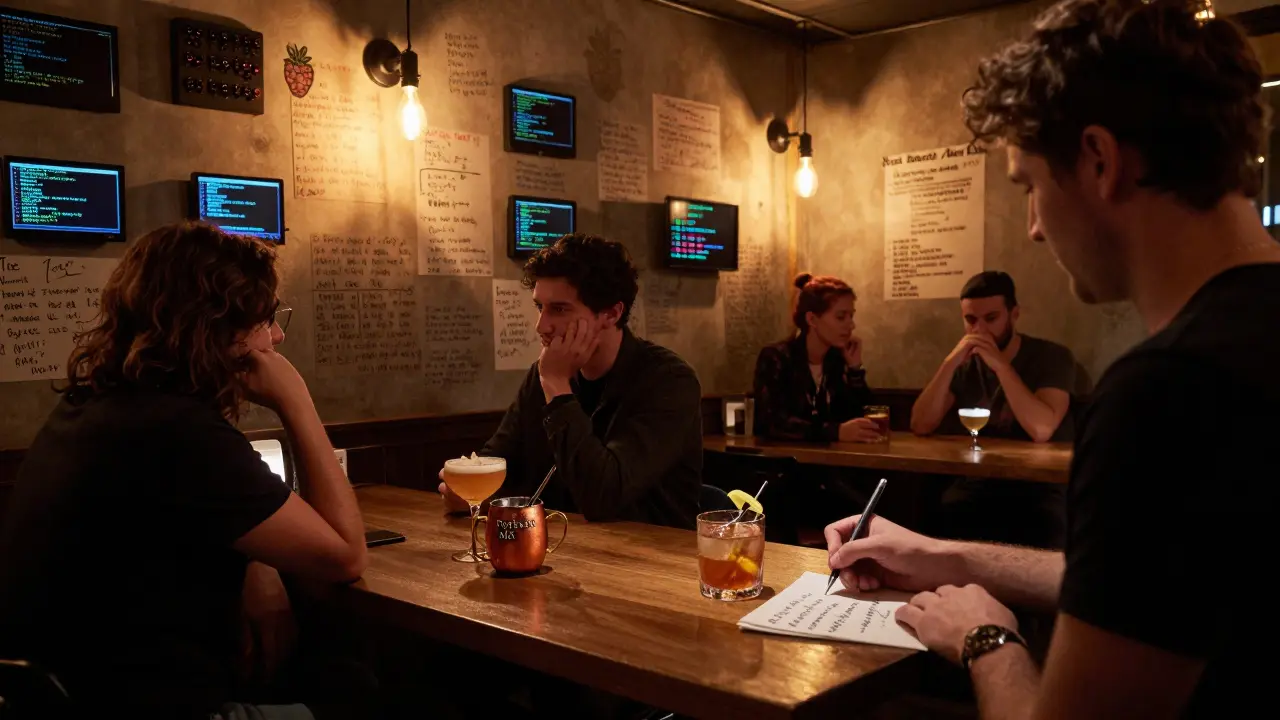
London doesn’t just run on the Tube-it runs on code. By 9 p.m., while tourists flock to Covent Garden, a different crowd is already settling into dimly lit venues where the buzz isn’t from cocktails, but from debates about AI ethics, blockchain protocols, and the next big SaaS pitch. If you’re a tech enthusiast visiting or living in London, your nightlife isn’t about loud music and crowded dance floors. It’s about connection, ideas, and the quiet hum of innovation that never sleeps.
Where the Code Meets the Cocktails
Start at The Code Bar in Shoreditch. It’s not just a name-it’s a vibe. The walls are lined with Raspberry Pi projects, the bartenders know what a REST API is, and the weekly Tech & Tonic nights draw founders, engineers, and open-source contributors. No cover charge. No dress code. Just free Wi-Fi, local gin, and a rotating lineup of indie devs demoing side projects. One regular, a former Google engineer turned startup founder, once built a real-time sentiment analyzer for the night’s conversation using a microphone and a Python script. It’s that kind of place.
Don’t expect neon signs or DJs spinning EDM. The music here is curated playlists-lo-fi beats, synthwave, or ambient electronic tracks that don’t drown out conversation. The drinks? Craft cocktails named after programming languages: the Python Mule (ginger beer, lime, smoked rosemary), the Rust Old Fashioned (bourbon, black walnut bitters), and the Java Negroni (espresso-infused gin, Campari, sweet vermouth). You’ll taste the code.
Startup Nights That Actually Deliver
Every Wednesday, Level 39 in Canary Wharf opens its doors for Startup Social. It’s not a pitch competition. It’s not a networking event with forced handshakes. It’s a casual gathering where early-stage founders, investors, and engineers mingle over pizza and craft beer. The vibe is relaxed. People talk about their bugs, their funding rounds, their failed prototypes. You’ll hear more about Kubernetes misconfigurations than IPO plans.
Since 2023, over 200 startups have met their co-founders here. One team met at a Startup Social in January 2024 and built a privacy-first AI tool for journalists within six months. They’re now backed by a London-based VC. No stage. No slides. Just real talk, real people, and real problems being solved.
Hackathons That Turn Into Hangouts
London’s hackathons aren’t just 24-hour coding marathons-they’re social rituals. DevOps London hosts monthly hack nights at the Old Street Hub. Teams form on the spot. You show up with a laptop, a hoodie, and an idea. You leave with a prototype, a new friend, and maybe a job offer.
Last October, a team of three strangers built a voice-controlled accessibility tool for visually impaired users using only open-source models. They won the prize: a free year of cloud credits from AWS. But the real win? One of them now works at the company that sponsored the event. These nights aren’t about winning. They’re about belonging.

Quiet Spaces for Deep Work and Deep Talks
Not every tech night needs noise. If you’re the type who prefers a quiet corner with a notebook and a black coffee at 11 p.m., head to Work & Co. in King’s Cross. It’s a hybrid co-working space and evening lounge. The lighting is warm. The chairs are ergonomic. The Wi-Fi is rock-solid. And every Thursday, they host Code & Conversation-a no-pitch, no-sales, no-jargon discussion circle on topics like “What does ethical AI look like in 2025?” or “Why are we still using Git?”
These aren’t panels with corporate sponsors. These are open mic-style gatherings led by participants. A data scientist once led a 90-minute debate on whether LLMs can truly understand context. No slides. Just whiteboards, sticky notes, and a lot of coffee.
Hidden Gems: Where the Real Tech Crowd Goes
Most guidebooks won’t tell you about The Algorithm, a basement bar under a bookshop in Camden. It’s unmarked. You need a password. You get it by signing up on their Discord server. Inside, you’ll find engineers from DeepMind, ex-Facebook devs, and indie game creators. The drink menu is written in pseudocode. The playlist? Only tracks from artists who use generative AI in their music.
Or try Neural Node in Brixton-a pop-up tech lounge that moves every month. Last month, it was in a converted laundromat. This month, it’s in a disused subway station tunnel. They project live GitHub activity on the walls. You can grab a beer and watch real-time contributions from developers around the world. It’s like seeing the internet breathe.

What to Avoid
Steer clear of the “tech-themed” bars that just slap a binary code pattern on their menus and call it a day. Places like “Byte & Brew” or “Cloud Cocktails” are marketing gimmicks. They’re packed with tourists and influencers. The staff doesn’t know what Docker is. The music is generic. The vibe is performative.
Real tech nightlife in London isn’t about aesthetics. It’s about substance. It’s about the person next to you who just open-sourced a library that’s now used in 12,000 production apps. It’s about the quiet nod you exchange when someone mentions a bug you’ve also spent three nights debugging.
When to Go
Weekdays are where the magic happens. Tuesday to Thursday are peak nights. Friday and Saturday? They’re for the crowds. If you want to talk to someone who’s actually building something, avoid the weekend rush. Most founders and engineers are too busy coding to party hard on weekends.
Check DevNightly, a community-run calendar that lists all tech-focused events in London. It’s not polished. It’s not sponsored. It’s just real. And it’s updated daily.
Final Tip: Bring Your Curiosity, Not Your Resume
The best nights don’t start with “I work at…” They start with “I built…” or “I’m stuck on…” or “Have you tried…?”
London’s tech nightlife isn’t about who you know. It’s about what you’re curious about. Bring your questions. Bring your code. Bring your frustration. Bring your excitement. The right people will find you.
Is London nightlife for tech people only?
No, but the best spots attract people who care about technology, innovation, and ideas. You don’t need to be a developer-just curious. Designers, writers, investors, and students all show up. What matters is whether you’re there to learn, share, or build something real.
Do I need to pay to get into tech events in London?
Most weekly gatherings like Tech & Tonic, Startup Social, or Code & Conversation are free. Some hackathons or special guest nights might charge £5-£10 to cover food or venue costs, but it’s rare. If an event asks for more than £15, it’s probably not the real thing.
Are these places safe for solo visitors?
Yes. London’s tech nightlife is known for being welcoming and respectful. People are there to connect, not to sell or impress. You’ll find a strong sense of community. Just use common sense-stick to well-lit areas, avoid overly crowded spots on weekends, and trust your gut.
Can I join if I’m not in tech yet?
Absolutely. Many people start as curious outsiders. One attendee at The Code Bar was a history teacher who taught themselves Python during lockdown. Now they build tools for museums. The tech scene in London thrives on diversity. Your background doesn’t matter-your questions do.
What’s the best time to arrive at these venues?
Arrive between 7:30 and 8:30 p.m. That’s when the real conversations start. People who come later are often just there for the drinks. The early crowd is the one building things, asking tough questions, and making connections that last.